
Spotting direct and parallel imports: what buyers in Switzerland should know
What is a direct or parallel import, why does it affect equipment and value – and how can you recognise one when buying a used car in Switzerland?
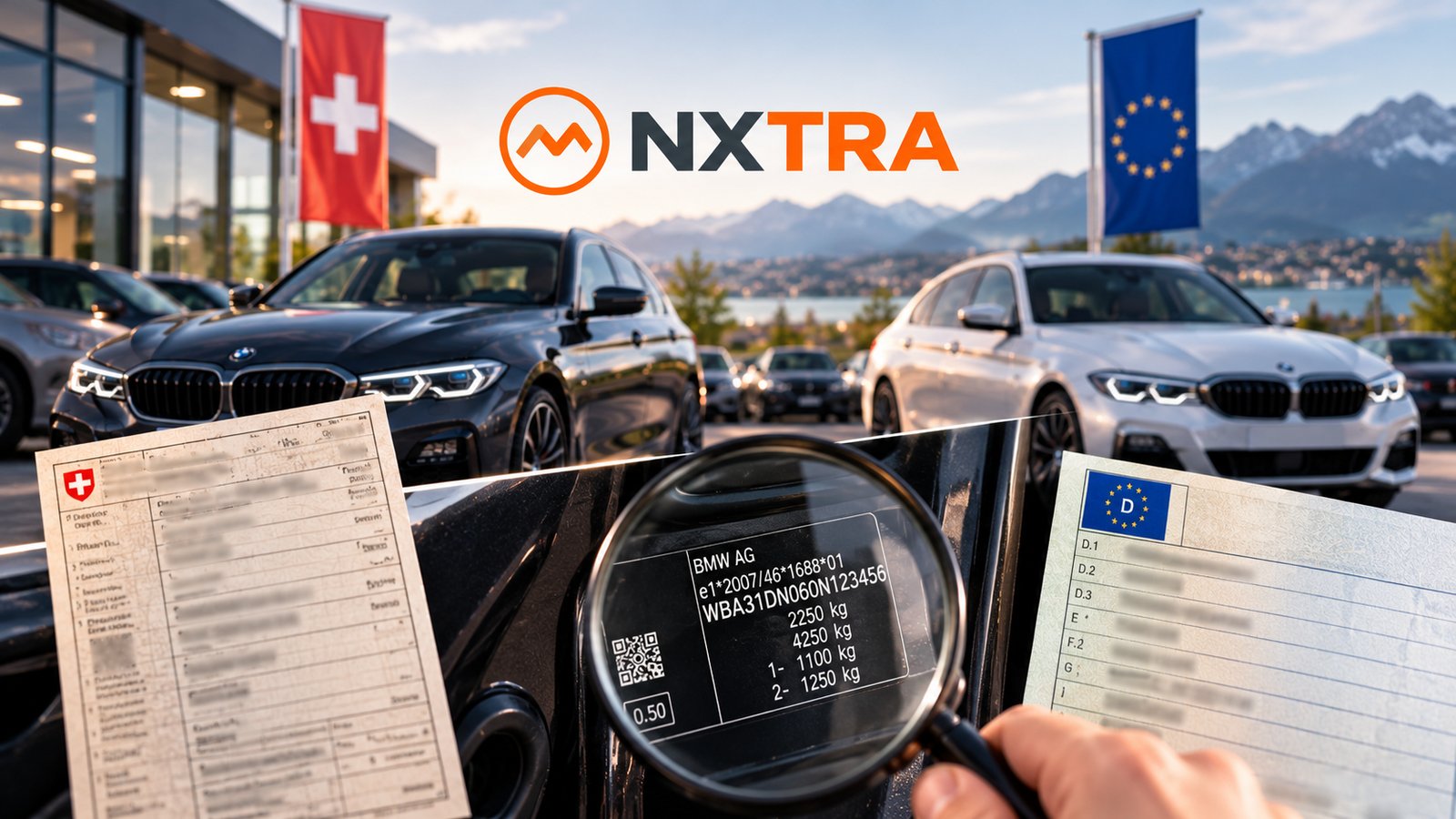
Many cars on the Swiss used-car market were not sold through the official Swiss importer but imported directly or in parallel from abroad. That is perfectly legal and can save money. Buyers and sellers should still know what it means for equipment, value and service.
Three ways a new car reaches Switzerland
- Official import: sold by the brand’s general importer and its dealer network, in Swiss specification.
- Parallel import: an independent dealer buys cars abroad and sells them in Switzerland, outside the official network.
- Direct import: a private person or dealer imports an individual car themselves.
Why it matters to buyers
Equipment
Manufacturers configure models differently for each country. A car built for another market can have different standard and optional equipment from the Swiss version, even with the same model name. A professional VIN lookup shows what is actually fitted.
Value
Direct and parallel imports are often valued lower in the trade than comparable cars from the official import. The import status should therefore be stated for a valuation. In the NXTRA vehicle valuation it is applied as an adjustment to the Swiss market value.
Warranty and service
Within Europe, the manufacturer’s warranty generally also applies to imported cars. Additional benefits from the Swiss importer – such as free service packages or extended warranties – are, however, often tied to the official import. Ask exactly which benefits apply to the car.
How to recognise an import
There is no single “import” label, but several clues together give a clear picture:
- Questions and documents: ask about the origin directly. Imports often come with import papers, foreign purchase contracts or service entries from abroad.
- Registration document: check the type approval (field 24) and first registration (field 36). The cantonal road traffic office can answer questions about discrepancies.
- Service book and manuals: manuals in a foreign language, stamps from foreign garages, navigation maps for other regions.
- Equipment: unusual combinations that were not offered in Switzerland.
Not proof: the first characters of the VIN show the country of production, not the market the car was intended for. A “W” (Germany) says nothing about an import. See Decoding a VIN.
Tips for buyers
- Get the car’s origin confirmed in writing.
- Use a VIN lookup to check that the equipment matches the listing.
- Clarify warranty and service benefits before buying.
- Compare the price with a valuation that takes the import status into account.
Tips for sellers and dealers
State the import status openly in the listing – it builds trust. A documented equipment list from a VIN lookup shows what the car really offers. Dealers can connect lookup, valuation and listing in the NXTRA car dealer software.
Updated on 26 October 2026